Swimming Pool Automation Systems: How Smart Technology Is Transforming Modern Pools
- Jun 18
- 5 min read
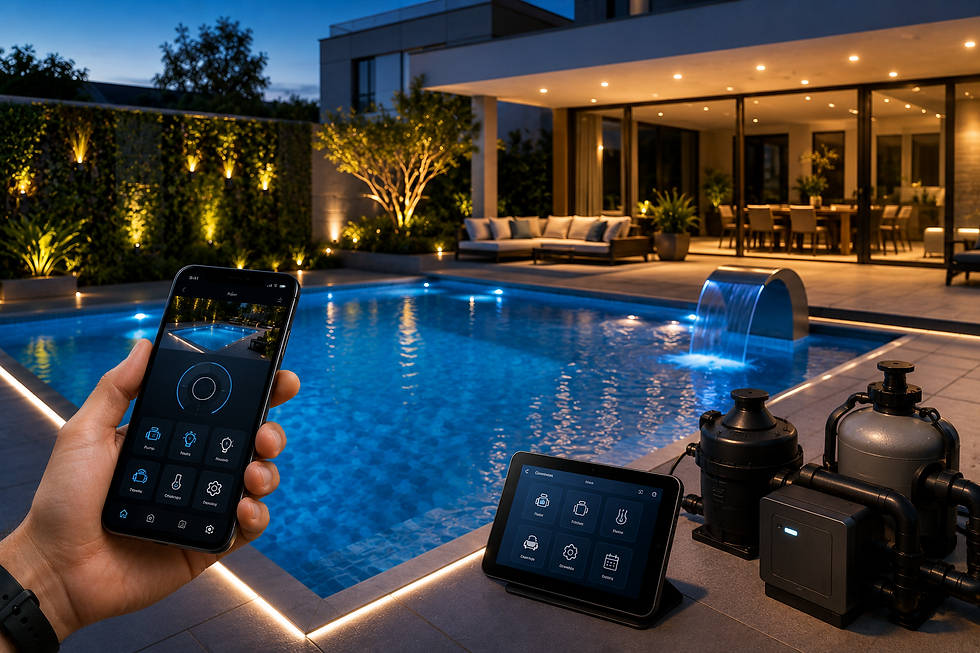
Modern swimming pools are no longer limited to pumps, filters, and manual cleaning. Today, intelligent technologies are revolutionizing pool ownership, making maintenance easier, improving energy efficiency, and enhancing the overall user experience. As a result, homeowners increasingly rely on a swimming pool service provider kolkata to integrate advanced automation systems into residential and commercial pools.
The answer is straightforward: swimming pool automation systems use smart devices, sensors, and connected controls to manage filtration, lighting, water chemistry, heating, and cleaning automatically. These technologies reduce manual work while improving operational efficiency and comfort.
Across India, premium residential projects are embracing smart outdoor amenities. Consequently, many homeowners collaborate with a swimming pool construction company kolkata to build intelligent pools equipped with app-controlled systems, automated filtration, and energy-efficient technologies.
Industry reports indicate that smart home technologies are becoming mainstream worldwide. Pool automation is emerging as a major component of this trend because it combines convenience, sustainability, and luxury.
What Is a Swimming Pool Automation System?
A swimming pool automation system is a centralized control platform that automates and manages essential pool operations.
These systems can control:
Filtration cycles
Water circulation
Pool lighting
Heating systems
Water chemistry
Cleaning equipment
Energy management
Most systems connect through:
Mobile applications
Wi-Fi networks
Touchscreen panels
Voice assistants
Cloud-based platforms
Therefore, homeowners can monitor and operate their pools remotely with minimal effort.
Why Are Smart Pool Technologies Growing Rapidly?
Several factors drive this growth:
Convenience
Automation reduces repetitive tasks.
Adjust pumps manually
Test water daily
Operate lighting separately
Schedule cleaning equipment
Instead, automated systems manage these operations intelligently.
Energy Efficiency
Energy-efficient technologies help reduce:
Electricity consumption
Water wastage
Chemical usage
Operational costs
Studies on smart home technologies suggest that automated energy management systems significantly improve resource efficiency across residential applications.
Enhanced User Experience
Smart pools provide:
Remote control
Real-time monitoring
Customized lighting
Automated maintenance
Improved water quality
This creates a more enjoyable ownership experience.
Which Features Define Modern Pool Automation?
Smart Filtration Systems
Filtration systems automatically:
Monitor water quality
Adjust filtration schedules
Optimize energy consumption
Alert homeowners about maintenance
This improves water clarity while reducing energy use.
Automated Water Chemistry
Water chemistry sensors continuously monitor:
pH levels
Chlorine concentration
Water balance
Temperature
If readings move outside optimal ranges, the system can:
Send alerts
Dispense chemicals automatically
Recommend corrective actions
Consequently, water remains cleaner and safer.
App-Based Controls
Mobile applications allow users to:
Start pumps remotely
Schedule filtration cycles
Adjust lighting colors
Monitor energy consumption
Activate heating systems
This flexibility has become one of the most attractive features of smart pools.
Smart Pools vs Traditional Pools
Feature | Automated Pool | Traditional Pool |
Filtration | Automated | Manual |
Lighting | Smart Control | Manual |
Water Monitoring | Real-Time | Periodic |
Energy Efficiency | High | Moderate |
Remote Access | Yes | No |
Maintenance Effort | Low | Moderate |
Traditional pools remain practical.
However, automated pools offer greater convenience and improved efficiency.
Therefore, luxury homeowners increasingly prefer smart systems.
How Does Pool Automation Reduce Maintenance?
Maintenance is one of the biggest challenges of pool ownership.
Automation simplifies:
Cleaning
Robotic cleaners can:
Remove debris
Clean floors
Scrub walls
Operate independently
This significantly reduces manual cleaning requirements.
Predictive Maintenance
Modern systems can predict:
Pump wear
Filter replacement needs
Water imbalance issues
Equipment malfunctions
Research on predictive maintenance technologies shows that proactive monitoring improves equipment lifespan and operational reliability.
Remote Alerts
Automated notifications inform homeowners about:
Equipment status
Water chemistry changes
Maintenance schedules
Potential system failures
Therefore, problems are addressed before they become expensive repairs.
Are Smart Pools Energy Efficient?
Yes.
Energy efficiency is one of the strongest advantages of pool automation.
Variable-Speed Pumps
Variable-speed pumps:
Consume less electricity
Operate more quietly
Adapt to demand automatically
Extend equipment lifespan
Compared with conventional pumps, they can substantially reduce energy consumption.
Smart Heating Systems
Automated heating systems:
Optimize temperature settings
Operate according to schedules
Reduce unnecessary energy use
This lowers operating costs.
LED Lighting
Smart LED systems provide:
Energy savings
Long service life
Color customization
Scheduled operation
As electricity costs rise, these features become increasingly valuable.
Is Pool Automation Suitable for Indian Homes?
Absolutely.
Automated pools are increasingly popular in:
Luxury villas
Rooftop residences
Farmhouses
Boutique hotels
Premium apartments
India's growing smart home ecosystem supports this transition.
However, successful implementation requires proper planning.
Many homeowners work with a swimming pool service provider kolkata to evaluate:
Internet connectivity
Electrical systems
Pool dimensions
Equipment compatibility
Future upgrades
This ensures reliable performance and scalability.
Real-World Example: Smart Pool Transformation
Consider a luxury homeowner seeking:
Lower maintenance
Energy efficiency
Smart controls
Enhanced aesthetics
The installed system includes:
Variable-speed pumps
App-controlled lighting
Automated filtration
Robotic cleaning
Water chemistry sensors
Result:
Reduced maintenance time
Lower electricity costs
Improved water quality
Greater convenience
This demonstrates why automation is reshaping modern pool ownership.
What Are the Latest Trends in Pool Automation?
Artificial Intelligence
AI-powered systems can:
Predict maintenance needs
Analyze water conditions
Optimize energy use
Improve equipment efficiency
Voice Control
Integration with smart assistants enables homeowners to:
Turn lights on or off
Start cleaning cycles
Adjust temperatures
Monitor equipment status
Integrated Outdoor Living
Modern luxury homes increasingly combine:
Automated pools
Smart landscaping
Outdoor entertainment systems
Intelligent lighting
Energy management platforms
This creates a fully connected outdoor experience.
For additional information on pool engineering and technology, homeowners can explore the Wikipedia article on swimming pools, which provides detailed insights into pool systems and their evolution.
How Should Homeowners Choose an Automation System?
Before investing, consider:
Which functions should be automated?
Is remote control essential?
What energy-saving features are available?
Can the system integrate with existing smart home devices?
Are upgrades possible in the future?
Answering these questions helps homeowners choose solutions that align with their lifestyle and long-term goals.
Many homeowners also collaborate with a swimming pool construction company kolkata to compare automation technologies and identify systems that offer the best balance of convenience, efficiency, and scalability.
Final Thoughts
Swimming pool automation systems are transforming the way homeowners interact with their pools. By automating filtration, cleaning, lighting, and water management, these technologies reduce maintenance, improve efficiency, and elevate the overall swimming experience.
As smart homes continue to evolve, intelligent pool systems are becoming an essential component of modern outdoor living. Whether your goal is convenience, sustainability, or luxury, automation offers a practical and future-ready solution.
For homeowners planning new installations or upgrades, investing in smart pool technology can enhance comfort, increase property value, and simplify pool ownership for years to come.
FAQs
1. What is a swimming pool automation system?
A swimming pool automation system uses smart technologies to automatically control filtration, lighting, cleaning, heating, and water chemistry through connected devices.
2. Can I control my pool from my smartphone?
Yes. Most modern systems offer mobile applications that allow homeowners to monitor and manage pool functions remotely.
3. Do automated pools save electricity?
Yes. Technologies such as variable-speed pumps, smart heating, and LED lighting reduce energy consumption significantly.
4. Are smart pool systems suitable for existing pools?
Yes. Many automation features can be retrofitted into existing pools, depending on equipment compatibility and infrastructure.
5. Which smart features are most popular in modern pools?
Popular features include app-based controls, robotic cleaners, automated water chemistry systems, smart lighting, and AI-powered maintenance monitoring.


Comments